

Healing Generational Trauma:
Restoring the Ancestral Line. Reclaiming the Self. Many of the patterns shaping our lives did not begin with us. They come from family history, cultural memory, and ancestral experiences that were never fully processed. These influences live quietly within our nervous systems, shaping our reactions, relationships, and beliefs about the world. Healing generational trauma is the work of breaking those inherited cycles and restoring alignment with one's deeper destiny.
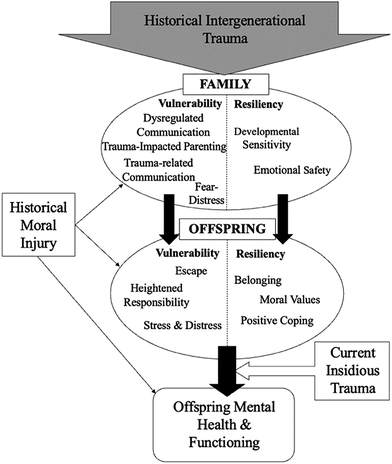
1. The Patterns That Are Not Yours. You may notice patterns in your life that seem larger than personal experience: • repeated relationship struggles • fear around money or survival • deep mistrust of authority or institutions • emotional reactions that feel disproportionate to present situations. These patterns are often ancestral imprints. Psychology refers to this as intergenerational or transgenerational trauma, where the effects of traumatic events continue across generations. Historical trauma—including slavery, war, displacement, and systemic oppression—can echo through families and communities long after the original event has passed. But the same lineages that carry trauma also carry resilience, wisdom, and power.
2 The Four Layers of Trauma Imprints Generational patterns tend to arise from 4 main sources.
Personal Imprints: Experiences from your own life. Examples: • childhood instability • loss of loved ones • emotional neglect • betrayal or abuse.
Ancestral Imprints: Family survival strategies passed through generations. Examples: • silence about painful events • emotional withdrawal • hyper-vigilance or survival anxiety inherited fears about money or safety.
Collective Imprints: Cultural narratives around identity, race, gender, and belonging. These shape how entire communities understand themselves.
Spiritual or Soul Themes. Some spiritual traditions believe individuals enter particular family lines to help resolve unfinished patterns. When approached carefully, this idea frames healing as purpose rather than punishment.
3 The Cycle Breaker. In many families, one person begins to question inherited patterns. This person often becomes the cycle breaker. Signs of this role include: • feeling different from family dynamics • strong interest in healing or spirituality • questioning inherited beliefs • desire to understand family history • emotional sensitivity to injustice or trauma. The work of the cycle breaker is not easy. But it is powerful. When one person heals deeply, the entire lineage begins to shift. The person most capable of restoring the lineage often ends up carrying the most pressure from it. Not because they are “punished,” but because systems push their unresolved material toward the person who can see it. (probably why you are here reading this)
4 Ancestral Healing. Many traditional cultures have always understood that healing involves reconnecting with ancestors. Modern therapists are rediscovering this truth. Ancestral healing can include: • learning family history • storytelling and genealogy • ritual and prayer • meditation and reflection • reconnecting with cultural traditions. These practices help people transform inherited pain into understanding and wisdom.
5 The Ori – Ẹ̀gún – Ẹgbẹ Framework Within African spiritual traditions, healing occurs through restoring balance between several aspects of the self. Three key dimensions include the following: Ori (Inner Head) Your consciousness, emotional clarity, and destiny direction. Ẹ̀gún (Ancestral Line) The living memory of those who came before you. Your ancestors carry both wounds and blessings. Ẹgbẹ (Spiritual Community) The unseen companions and destiny allies connected to your life path. When these dimensions are aligned, the individual becomes stable, clear, and spiritually grounded.
6 Practical Steps Toward Healing. Healing generational trauma begins with awareness. Key practices include the following: Awareness and understanding of family patterns and history. Emotional Processing: Allowing grief and anger to be acknowledged. Forgiveness releases energetic entanglement even when others never change. Intention and Attention: Where attention goes, energy flows. Conscious intention helps shift patterns. Cultural reconnection rituals, meditation, and ancestral reverence restore lineage continuity.
7 Healing the Lineage. When individuals heal deeply, several changes often occur: • reduced emotional reactivity • improved relationships with family • release of repeating patterns • greater clarity and confidence • stronger sense of identity and purpose. Life begins to feel less like survival and more like participation. Healing generational trauma is not only personal. It is cultural restoration.
Begin Your Ancestral Alignment Journey.
The patterns running your life are not all yours. But the responsibility to clear them is. Healing generational trauma is not about becoming perfect. It is about becoming whole. If you feel called to work more deeply with these themes, there are several ways to begin.
1. Ori–Egun–Egbe Alignment Session A private consultation exploring: • emotional patterns • ancestral influences • spiritual alignment • recommended practices ________________________________________
2. Pan-African Ancestral Egbe Training Structured training focused on: • ancestral healing• spiritual discipline • personal development • community support ________________________________________
3. Culturalist Newsletter Join the newsletter for articles on:• ancestral healing • African spiritual philosophy • cultural restoration • personal transformation
practices________________________________________
Join the Culturalist Newsletter →